The Quechua Route of the Altiplano: the destinations of the Puno altiplano you must visit to discover the beauty and history of Peru
- elizabethcarlotto
- Jun 11
- 5 min read
There are routes that, once discovered, make you see the world through different eyes. Routes where you appreciate the vastness and beauty of nature, where millenary history speaks to you from every stone and every landscape. The Quechua Route of the Puno altiplano is one of them. It stands on its own, with the silent force of everything that is true.

Sillustani: nostalgia and ancestral memory
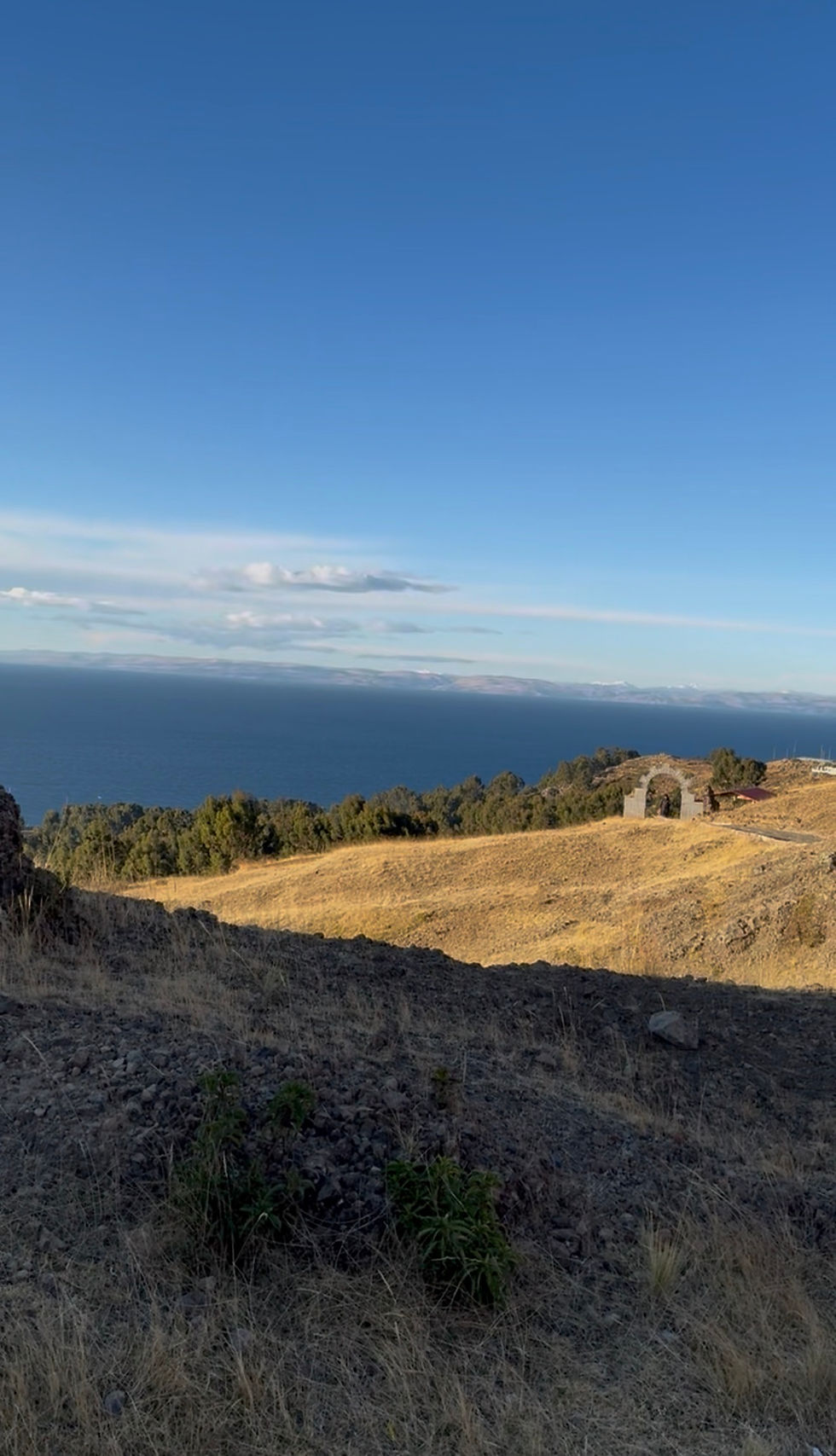
Thirty-four kilometers from Puno, on a peninsula that reaches into Laguna Umayo, the chullpas of Sillustani rise like stone sentinels that have been watching the horizon for centuries. These Colla funerary towers — some more than twelve meters tall — were built to shelter the curacas and their families on their journey to the afterlife. They are not simple tombs. They are declarations of power, of faith, of an understanding of the universe that we, with all our technology, are only beginning to decipher.
What surprises you most is not their scale, but their precision. Stone blocks fitted together without mortar with an accuracy that defies explanation. Archaeologists are still debating how they were built. I prefer to stay with the mystery.
Arrive at sunset. When the golden light of the altiplano paints Laguna Umayo and the chullpas cast long shadows across the earth, you will understand why the Collas chose this place to watch over their dead. There are few places in the world where the boundary between this world and the next feels so thin.


Pucará: the origin of a symbol that conquered the world
There are objects that become so familiar we forget to ask where they come from. The torito de Pucará — that colorful ceramic bull that crowns the rooftops of Andean homes as a symbol of prosperity and protection — was born here, in this small altiplano town on the banks of the Pucara river.
But Pucará is much more than its artisanship. The ruins of Pukara, dating from between 200 BC and 200 AD, are one of the most important ceremonial centers of the pre-Inca altiplano culture. The stepped platforms and stone enclosures that spread across a hill overlooking the landscape speak of a sophisticated civilization that flourished centuries before the Incas and left a deep mark on the Andean worldview.
The Museo Lítico de Pucará holds the most extraordinary pieces of that culture: stelae, monoliths and stone sculptures of human and animal figures with a surprising expressiveness. It is one of those small museums that holds you far longer than you expected.


Leaving Pucará with a torito in your hands is no longer the same tourist gesture as before — it is carrying away a piece of living history from the altiplano.
Lampa: the pink city that holds the only copy of Michelangelo's Pietà in the world
There are towns that hold secrets too large for their size. Lampa is one of them. Its pink adobe streets, colonial balconies and main square frozen in time invite you to slow down, to walk without a destination, to let the place find you.

But Lampa's greatest treasure lies underground. In the crypt of the church of Santiago Apóstol rests something very few travelers know exists: the only copy of Michelangelo's Pietà in the entire world. Commissioned in the 19th century by the landowner Enrique Torres Belón, this unique piece rests in the very crypt where he chose to be buried — as if he wanted to spend eternity beside the work he loved most.

What followed is a story worthy of a novel. In 1972, a disturbed man attacked the original Pietà in the Vatican with a hammer, severely damaging the face and arm of the Virgin. During the restoration, experts needed an exact reference of the original work. And the only existing copy in the world was in a small town on the Peruvian altiplano. The Lampa replica traveled to Rome to help save one of humanity's most venerated works.
Behind this story stands a man who deserves to be remembered. Enrique Torres Belón was one of the most influential figures of 19th-century Puno — landowner, politician and patron who devoted much of his fortune and his life to the development of his region. He served as a senator of the Republic and was one of the driving forces behind the southern railway, the infrastructure that connected the altiplano to the rest of Peru and forever transformed the lives of its people.
But his most extraordinary legacy was born of an obsession and a boldness rarely seen. Torres Belón dreamed of bringing to the Peruvian altiplano a replica of Michelangelo's most sublime work — the Vatican Pietà. It was no small ambition: the Vatican had never permitted it to be copied. Yet Torres Belón was not a man who accepted no for an answer. Through his contacts and with a perseverance that bordered on the impossible, he achieved what no one before him had managed: the Vatican's permission to create the only plaster copy of the Pietà in existence.
A man from the altiplano who looked toward Rome, insisted until Rome listened, and brought back something unique and irreplaceable for his land.
Think about it for a moment: a pink adobe town in the Peruvian Andes holds the world's only copy of Michelangelo's most sublime work. That is what makes this town great. That is what makes Puno great.

Tinajani: where the wind sculpted the soul of the altiplano
When you think the altiplano can no longer surprise you, Tinajani appears. A few hours from Lampa, the landscape shifts in a quiet and powerful way: suddenly you are inside a canyon of rock formations that the wind and water sculpted over millions of years with the infinite patience of one who knows that beauty is in no hurry.
The condor. The cathedral. The elephant. The names that local imagination gave to these rocks are not arbitrary — when you see them, something inside you recognizes them before your mind has time to explain it. There is something in Tinajani that awakens a very ancient part of the soul, the part that knows how to read the secret language of stones and listen to what the wind has to say.
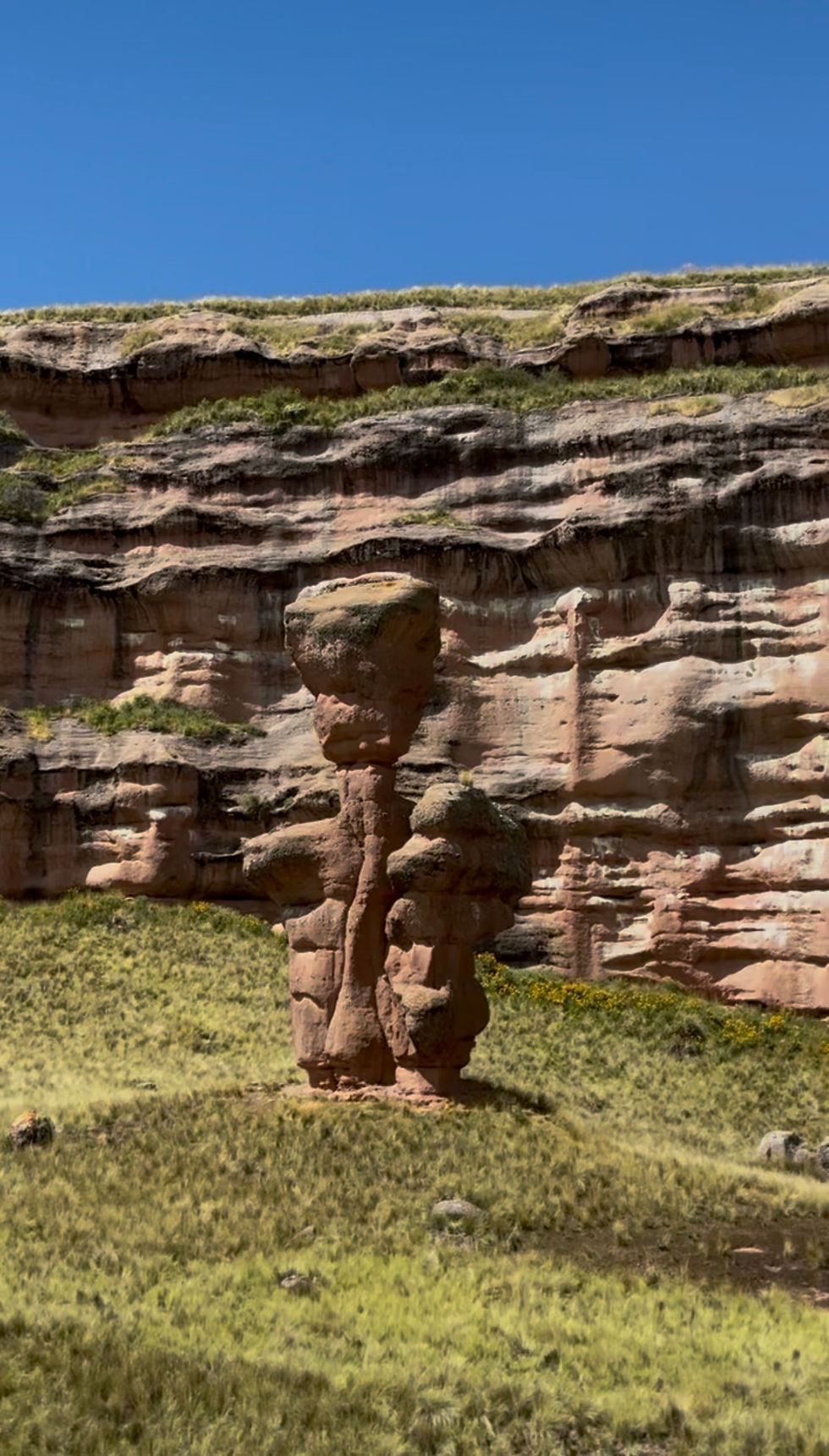
No voices break the silence, no hurry pulls you away from the moment. Only the altiplano wind, the deepest blue sky you have ever looked up at, and that strange and sacred feeling of standing in a place the world has not yet finished discovering.

Tinajani taught me that the most extraordinary places in the world are not always on the most well-known maps. Sometimes they are right here, waiting for us in silence.


Comments